
PRP for Knee Arthritis
Sep 17, 2026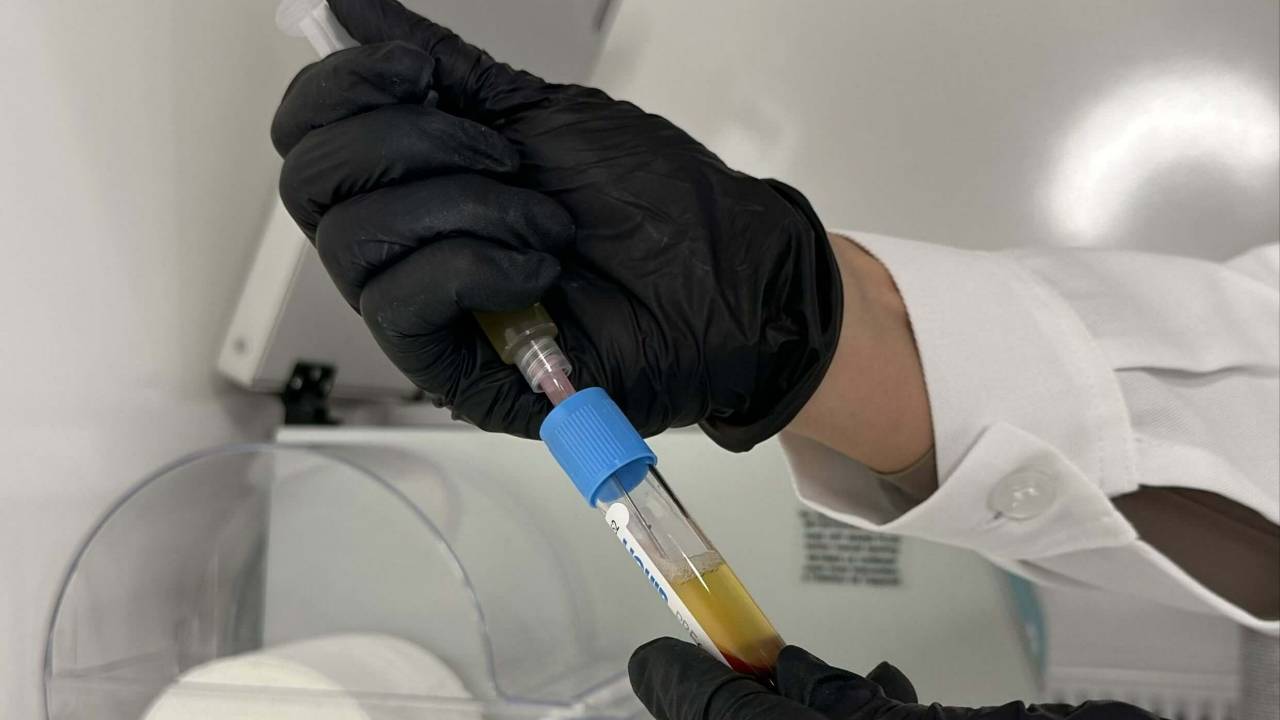
If you have knee arthritis — or you love someone who does — there's a good chance you know injections are often offered as a treatment option. You may even know there are different types of injections. You may have even heard of PRP or seen a news story about an athlete getting an injection and returning back to playing really quickly.
If you are the one with knee arthritis you start looking for options when your knee is telling you to avoid the stairs, the uneven streets, avoid the bleachers, or even avoid the vacation. You know you are beyond “take an ibuprofen”, but not yet ready for a knee replacement.
So, what is it?
PRP stands for platelet-rich plasma, and the "platelet-rich" part is doing all the work here.
We draw your own blood and spin it in a centrifuge. That separates it out into layers, and we pull off the layer that's full of platelets (platelet rich).
Platelets are the cells your body already sends to any injury to kick off healing. They're
packed with growth factors that calm inflammation and signal nearby tissue to repair itself.
PRP is basically taking that healing signal, concentrating it, and injecting it directly into the
joint that needs it — in this case, your knee.
It's your own blood. Nothing foreign, nothing synthetic. We do not have to worry if your body will accept it.
Does it actually work, or is this wishful thinking?
The research has gotten a lot more convincing over the last couple of years, and I
don't say that lightly — I want real evidence before I put something in your knee, not just a
good story.
The most recent comprehensive review, pulling together 28 high-quality studies through
early 2025, found that PRP — especially a specific type called "leukocyte-poor" PRP —
Performed as well as hyaluronic acid ("gel" injections), but superior relief when combined with hyaluronic acid injection.1
There's also a growing sense that dose matters — one recent analysis found higher concentration of platelets leads to better results, which is why how the PRP is prepared matters as much as whether you get it at all. Not all PRP is created equal, and not all clinics prepare it the same way.
The sweet spot seems to be people with mild-to-moderate arthritis, not the "bone on bone, nothing left" end of the spectrum.
I'll be honest with you, though: just like cortisone does not work for everyone, PRP has its limitations as well. Some of the older, broader osteoarthritis guidelines from major medical societies are lukewarm on PRP. The initial studies varied in concentration and preparation. With improved technology and some standardization, that has gotten better.
PRP is promising, evidence-based, and reasonable to try, but it is not a guaranteed cure, and it's not going to regrow cartilage.
In my experience, and in line with what the research shows, PRP tends to be the best fit for
people who:
- Have mild-to-moderate arthritis (not end-stage, bone-on-bone changes)
- Have tried the basics — physical therapy, weight management, activity modification —
without full relief
- Want to avoid or delay repeated steroid shots (which can actually weaken cartilage over
time with frequent use).
- Are trying to put off surgery
And
Are otherwise healthy enough for a simple in-office procedure.
It's not usually the right call if your arthritis is severe and your joint space is essentially gone — at that point, we're having a different conversation about your options.
What the appointment actually looks like.
This part surprises people because it feels so routine. We draw your blood in the office, prep it in the centrifuge (this takes maybe 10-15 minutes), and inject the PRP into your knee.
You're in and out in under an hour, and you can drive yourself home.
Afterward, your knee will likely feel a little achy or swollen for a couple of days — that's actually
a sign the inflammatory/healing process is doing its job, not a sign something's wrong. Most
people are back to normal activity within a few days, and it's common not to feel the full
benefit for several weeks, as the healing response builds.
In all honesty, I don't think of PRP as magic, and I'd never promise you it is. I think of it as a smart, low-risk tool that uses your own body's healing machinery to calm down an angry joint and buy you real, meaningful relief — often enough relief to get back to the things you actually want to be doing.
For the right person, at the right stage of arthritis, with well-prepared PRP, it has good evidence. This is reassuring as 5 years ago, I was more cautious as the evidence just was not there yet.
If you're curious whether your knee is a good candidate, that's exactly the kind of
conversation I love having — let's actually look at your knee, your imaging, your history, and
figure out if this makes sense for you, rather than guessing from a blog post.
Interested in finding out if PRP is right for your knee? I'd love to talk it through with you.
- Wang C, Yao B. Efficacy and safety of platelet-rich plasma injections for the treatment of knee osteoarthritis: a systematic review and meta-analysis of randomized controlled trials. Eur J Med Res. 2025 Oct 17;30(1):992. doi: 10.1186/s40001-025-03253-4. PMID: 41107915; PMCID: PMC12535052.